

In this article, the writer captures how Thailand’s Royal Blossom — a reimagined fleet of Japanese carriages transformed by Thai artisans — turns scenic rail travel through rice paddies, river bridges, and golden stupas into a destination in its own right.
There is a specific kind of magic that only exists on the rails: a rhythmic, percussive lullaby that suggests the world is moving exactly as it should. For those of us who grew up under the cinematic spell of The Darjeeling Limited or the claustrophobic elegance of Murder on the Orient Express, the train is not a mere vehicle; it is a stage. In Thailand, that stage has found its most romantic iteration yet: the Royal Blossom, a luxury sightseeing train designed for immersive travel across some of the country’s most scenic routes.
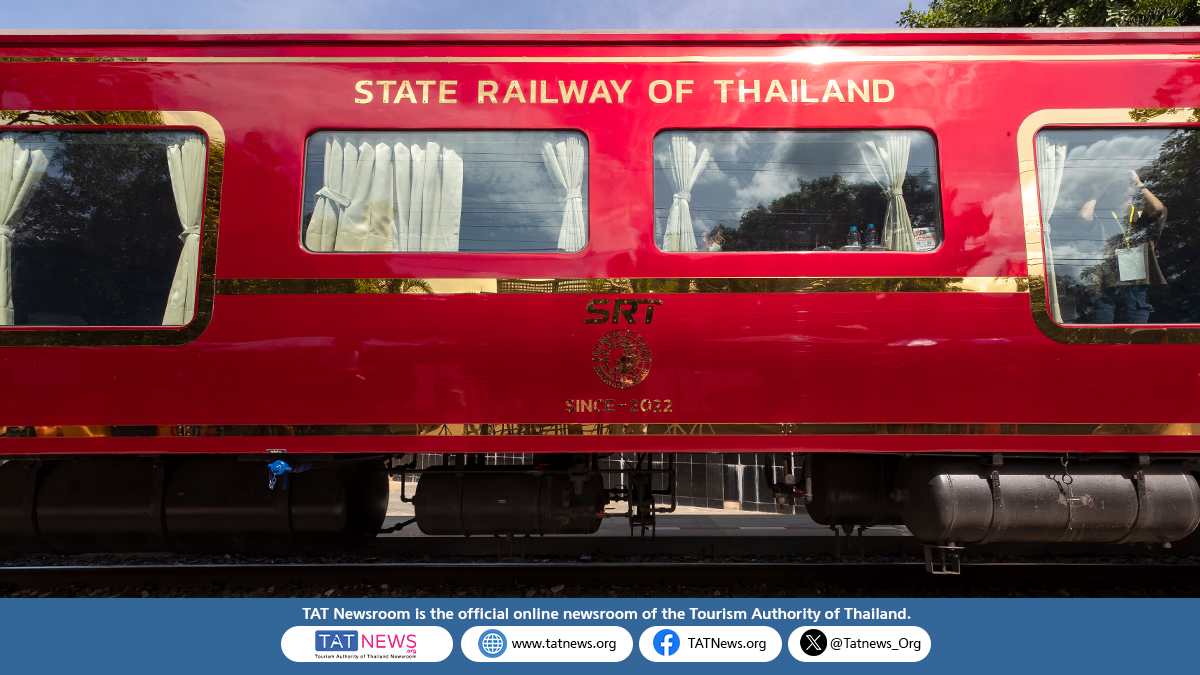
Stepping onto the platform at Bangkok’s historic Hua Lamphong station, you feel the shift in atmosphere. While the sleek, modern terminals of the world prioritise efficiency, Hua Lamphong—with its high-arched ceilings and lingering scent of diesel and nostalgia—demands presence. Here, the Royal Blossom waits, gleaming in a deep cherry-red livery accented with gold, like a vintage jewel box ready to be opened.


A Japanese Legacy, a Thai Soul
The Royal Blossom isn’t just a new train; it’s a rebirth. These carriages began their life as the legendary Hamanasu express in Japan, the last regular overnight train to traverse the undersea Seikan Tunnel between Hokkaido and Honshu. After being retired in 2016, they were gifted to the State Railway of Thailand (SRT), where they underwent a remarkable transformation. Thai artisans replaced the utilitarian Japanese seating with custom-upholstered velvet and lined the interiors with cedar wood from the north, hand-polished until it gleamed. The original signage was swapped for delicate Thai script and intricate gold embellishments, and the exteriors were repainted in a regal cherry and gold to reflect the colours of royal processions. Small carvings of lotus blossoms and traditional motifs now accent the doorways, blending Japanese engineering with unmistakable Thai craftsmanship—creating a space that would make even Wes Anderson’s production designers blush.
Inside, the transition from “commuter” to “luxury” is seamless. The interiors are a masterclass in tactile comfort: plush velvet seats in warm hues, cedar-wood panels that lend the air a faint, earthy fragrance, and—most importantly—massive, panoramic windows. These aren’t just windows; they are wide-angle lenses through which the Thai countryside becomes a living gallery.


The Romance of the Route
As the train whistles—a sound that feels like a call to adventure from a 1940s noir—we pull away from the urban sprawl of Bangkok. My journey takes me toward Kanchanaburi, a route steeped in history and haunting beauty.
There is something inherently romantic about watching the city’s concrete edges soften into the emerald greens of rice paddies and the limestone karsts that define the western horizon. In the Leisure Car, which feels more like a chic Parisian bistro than a train carriage, I find myself nursing a coffee and watching the light change. The car features a curved bar and communal spaces designed for “slow travel,” a philosophy that encourages you to look out, not down at a screen.
As we approach the Bridge over the River Kwai, the cinematic weight of the journey hits home. You can almost hear the ghostly echo of David Lean’s 1957 masterpiece. But unlike the film’s tension, our passage is one of quiet reverence. Crossing the bridge on the Royal Blossom feels like a bridge between eras—honouring the past while gliding gracefully into the future.
The Art of the Linger
What sets the Royal Blossom apart is its refusal to rush. This is a sightseeing train, not a high-speed projectile. Along the route, the train pauses at stations like Nakhon Pathom, allowing passengers to disembark and take in the towering Phra Pathom Chedi, the world’s tallest golden stupa. Other memorable stops include Kanchanaburi, where you can walk along the famous bridge and explore the poignant JEATH War Museum, and Tha Rua, a riverside station that invites travellers to sample vibrant local markets or join a longtail boat excursion along the Mae Klong River. Each stop feels thoughtfully chosen to highlight a distinct moment in the journey, turning the trip into a curated tapestry of landscapes and stories.
Back on board, the amenities cater to the modern traveller without sacrificing the vintage aesthetic. One of the highlights is the onboard dining experience, which feels every bit as curated as the train’s design. Passengers are invited to gather in a dedicated Dining Car, where attentive staff serve a rotating menu of Thai classics and Western favourites, artfully plated on porcelain tableware. Breakfast features dishes like fragrant jasmine rice porridge with local herbs and tropical fruit platters, while lunch might bring a tangy green curry or grilled river fish sourced from markets along the route. Afternoon tea is a languid affair, with delicate pastries, lemongrass-infused iced tea, and the opportunity to mingle with fellow travellers as the sun slants through the windows. With each meal, the flavours deepen the sense of place, turning the journey itself into a celebration of Thai culinary traditions.
The Sunset Return
The true climax of the journey, however, happens on the return leg. As the train snakes back toward Bangkok, the sky begins to bruise into shades of violet and burnt orange. In the “floating train” sections near the Pasak Chonlasit Dam (on the Lop Buri route), the tracks are elevated above the water, creating the illusion that the Royal Blossom is skimming across a glass sea.
In movies, train journeys usually end with a dramatic parting or a grand arrival. As we pull back into the golden glow of Bangkok, there is no such drama—only a profound sense of peace. The Royal Blossom reminds us that the greatest luxury isn’t speed; it’s the ability to sit still while the world moves beautifully around you. For a few hours, we weren’t just passengers; we were characters in a story where the ending didn’t matter as much as the view from the window.


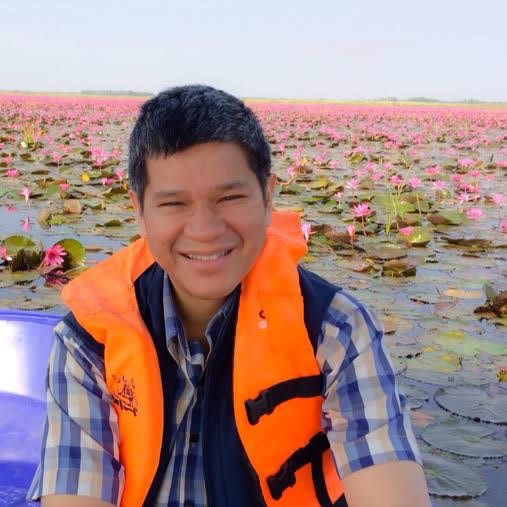
About the Author
“Frequent foodie and occasional craftsman of travel stories, Chattan Kunjara Na Ayudhya (Chat) draws on his nearly 4 decades of promoting Thailand’s tourism industry to highlight everything from world-class attractions to hidden gems. When not writing stuff, he makes it a mission to catch rom-coms and DC superheroes whenever they show up in theaters.”