

Thailand’s most iconic dishes carry stories far older than their modern fame suggests. In this article, the writer explores how Chinese migration shaped the evolution of Thai cuisine, tracing its roots through Yaowarat’s vibrant streets and revealing how wok techniques and Thai herbs fused into flavours recognised worldwide.
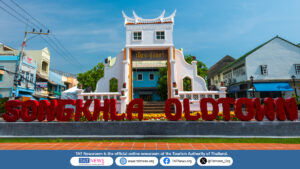
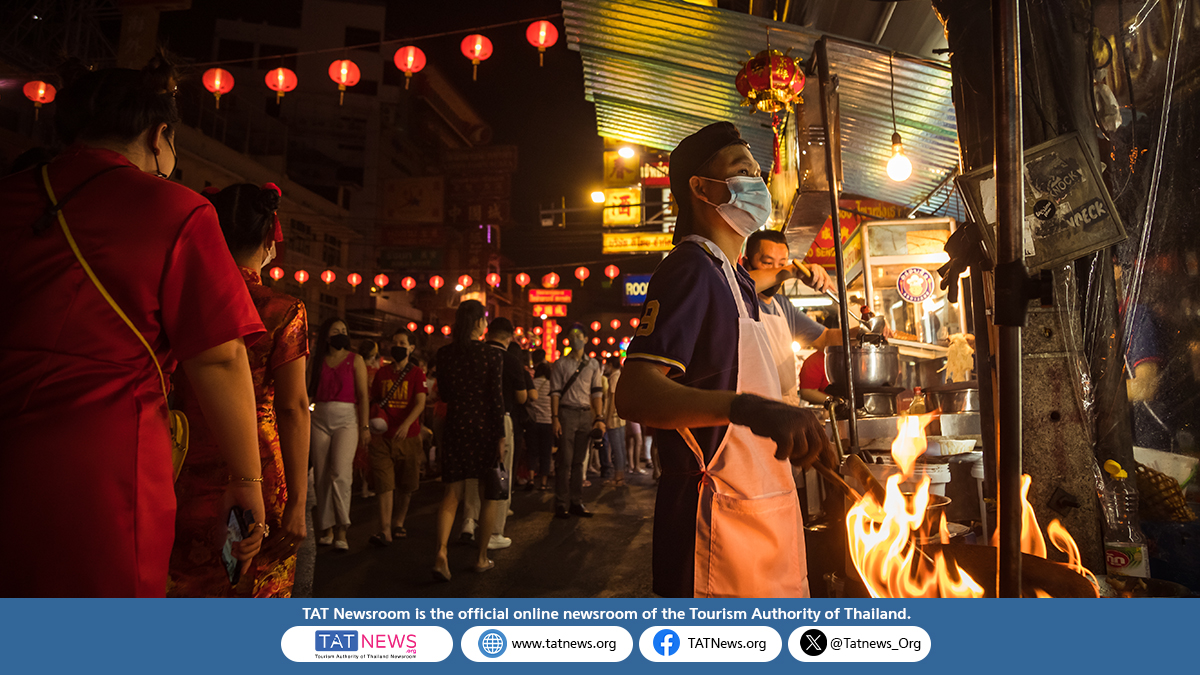
If you ask me where the heart of Thai food is, I won’t send you to a fancy riverside resort or a Michelin-starred restaurant. I’d take you straight into the humid, neon-lit alleys of Yaowarat, Bangkok’s famous Chinatown, where the smell of sizzling garlic mixes with the aroma of frying shallots. The constant buzz of motorbikes and the voices of street vendors draw you further in. What started as a few Hokkien sailors settling along the Chao Phraya River in the 1850s has grown into a rich mix of flavours that many now consider classic Thai cuisine.


As someone who loves to eat, I’ve learned that the ‘Thai food’ everyone knows—Phat Thai, mango and sticky rice, steaming curry bowls—isn’t just one thing. It’s the result of a long exchange between Thai tastes and the Hokkien, Teochew, and Cantonese immigrants who arrived generations ago. An unforgettable taste of this mix was on a pleasant night in one of Bangkok’s labyrinthine backstreets. I stood in front of a street vendor, not sure what to order. She smiled and suggested a plate of spicy basil chicken with deep, smoky flavours I’d never found so addictive. That first bite was eye-opening—a perfect mix of textures and spices. It made me realize that eating in Thailand is about experiencing the meeting of the Chinese wok and the Thai mortar and pestle.
The Alchemy of the Wok
The first thing you notice in any Thai street food area is the sound: the steady clack of a metal spatula hitting a well-used wok. Before Chinese migration, Thai cooking focused on grilling, boiling, or fermenting. The Chinese introduced stir-frying and the idea of wok hei, or the ‘breath of the wok.’
Take Pad See Ew, for instance. On the surface, it’s a simple dish of wide rice noodles, Chinese broccoli, and egg. But when done right, it’s a masterclass in fusion. The dark soy sauce and the noodle texture are pure Teochew heritage, but the way a Thai cook serves it—with a side of vinegar-soaked chilies and a squeeze of lime—transforms it into something uniquely Southeast Asian. It’s that balance of salty, charred umami and sharp, acidic brightness that keeps me coming back for a second helping late into the night.
The Crispy Pork Obsession
We need to talk about Moo Krob (crispy pork belly). My fellow foodies, if there is a more perfect food on this planet, I haven’t found it. Pad Kaprow Moo Krob is the ultimate example of Thai culinary remix: taking a classic Chinese technique for rendering fat and crisping skin and adding a Thai twist. The Cantonese five-spice profile is seamlessly transformed with the introduction of Thai basil-driven heat and the explosive kick of bird’s eye chilies. This contrast between the subtle warmth of five-spice and the sharp, aromatic intensity of Thai herbs defines the spirit of culinary innovation and harmony in this fusion.
A Map for Your Taste Buds
If you’re planning a “fusion pilgrimage,” here are the non-negotiables:
| Dish | Chinese Origin | The Thai Twist |
|---|---|---|
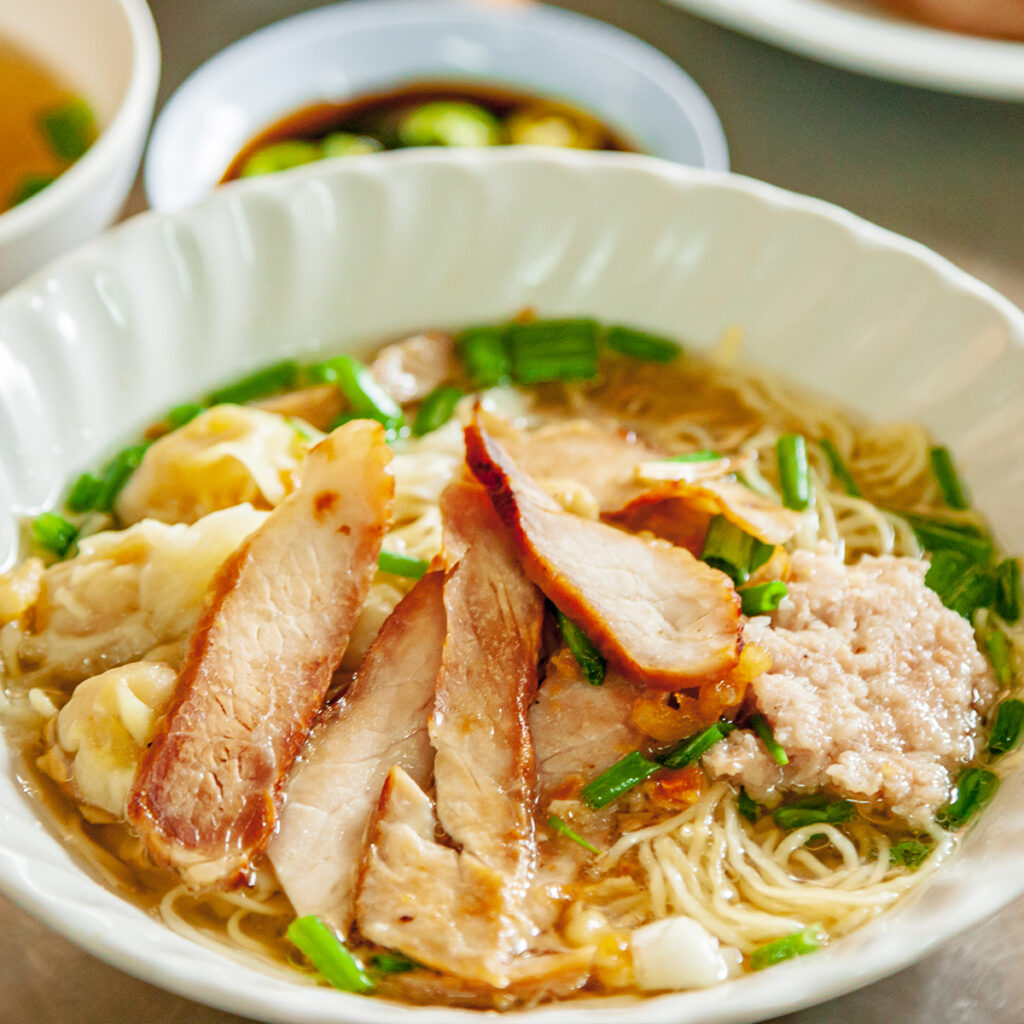
| Guay Tiew | Rice Noodle Soup | Customize with fish sauce, sugar, and dried chili flakes. |
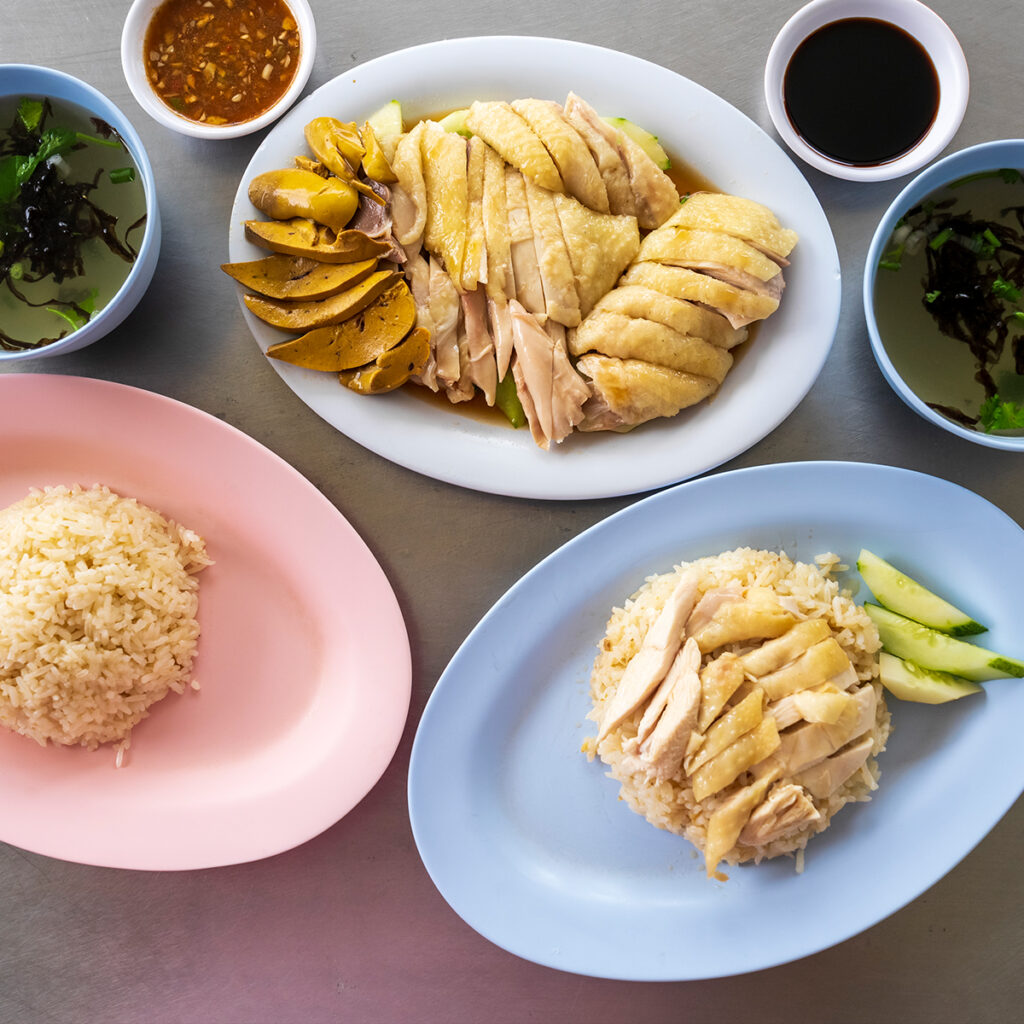
| Khao Man Gai | Hainanese Chicken Rice | A spicy, fermented soybean sauce with ginger and garlic. |
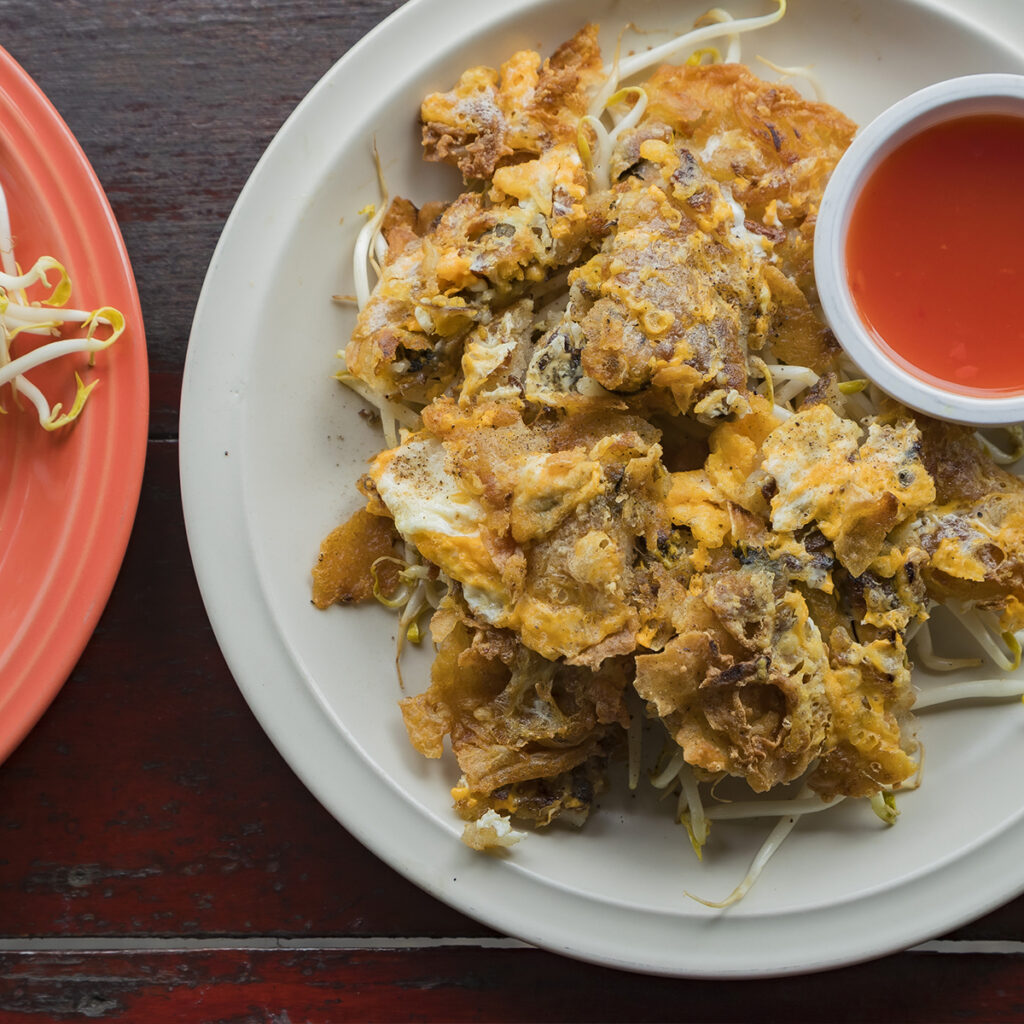
| Hoi Tod | Oyster Omelet | Made extra crispy with a sweet-and-spicy chili dipping sauce. |
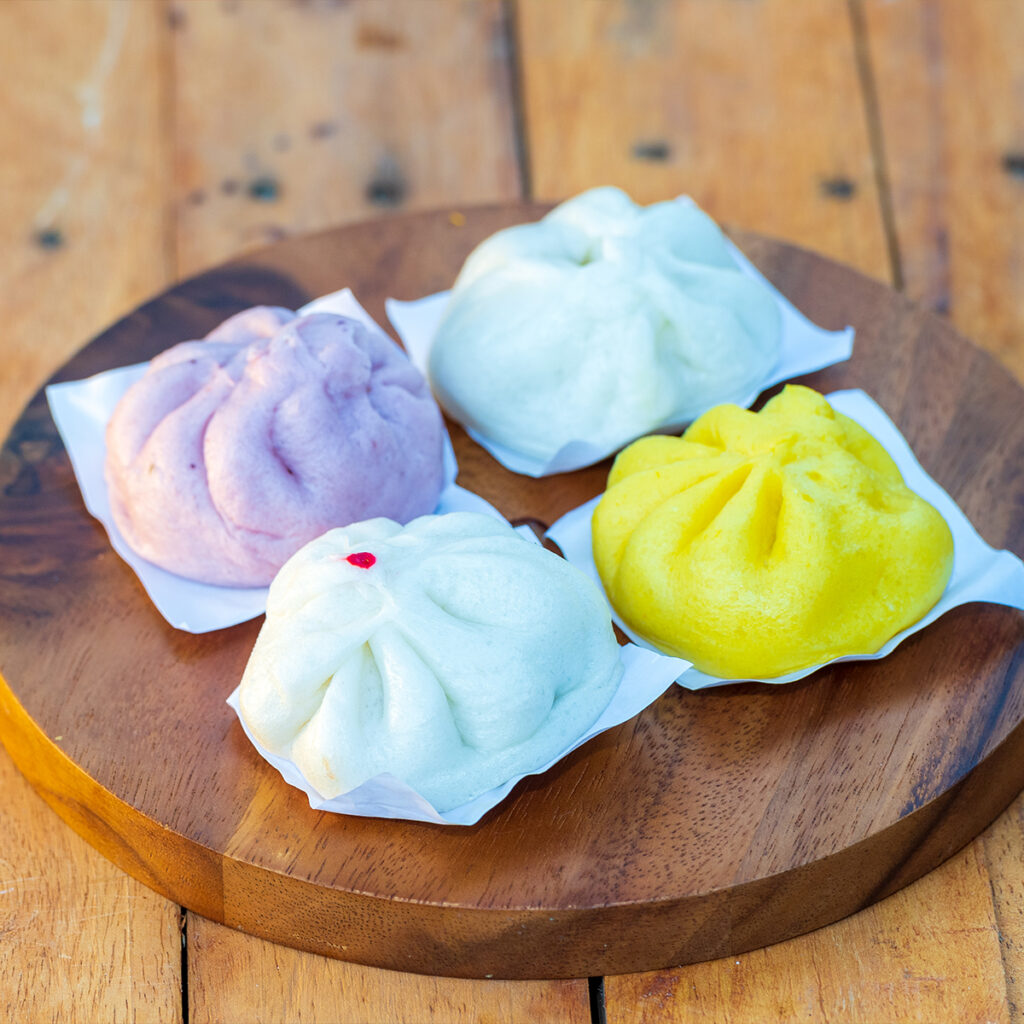
| Salapao | Steamed Buns | Fillings like spicy minced pork or sweet, salted-egg lava. |
The Morning Ritual: Dim Sum with a Kick
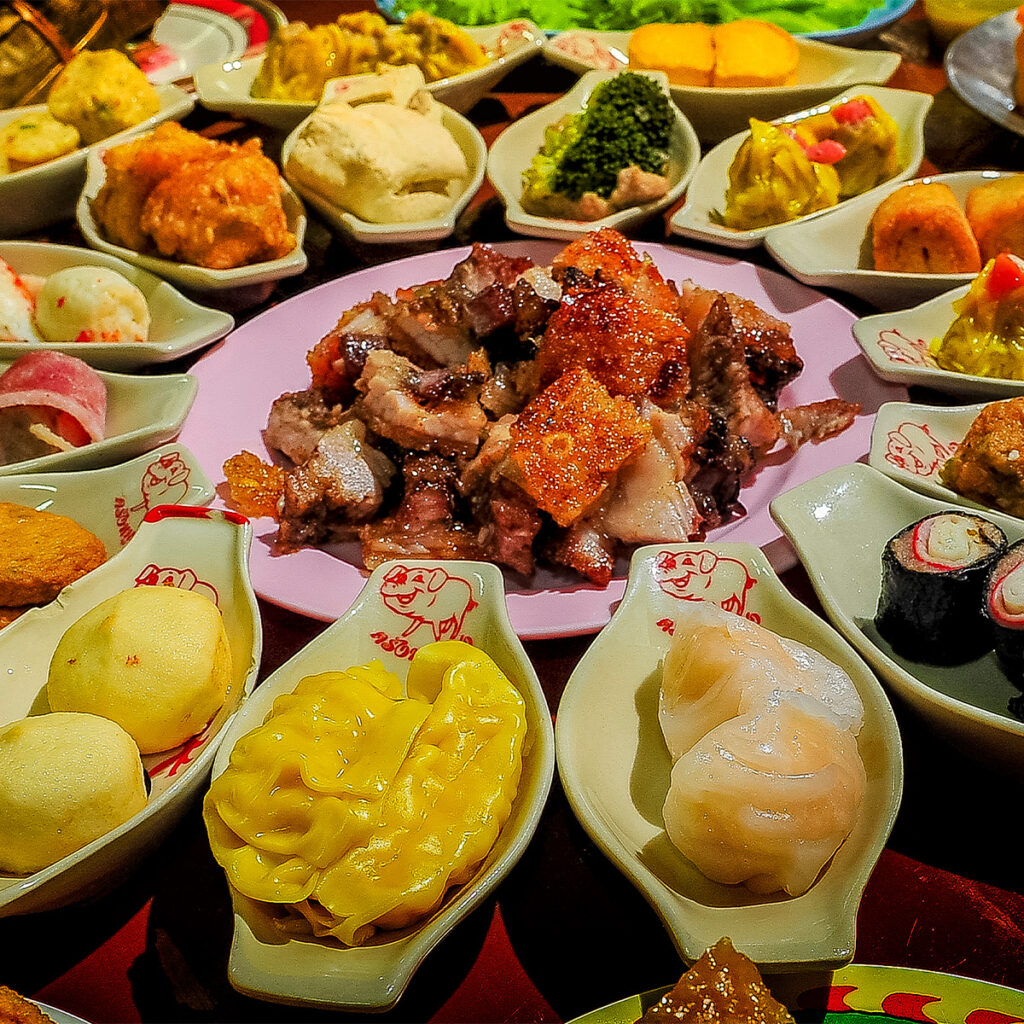
One of my favorite ways to start the day in Southern Thailand, especially in places like Phuket or Trang, is by visiting a local dim sum shop. These areas have strong Hokkien roots. You’ll find bamboo steamers with shumai and har gow, but the setting feels truly Thai.
Locals enjoy their dumplings with Kopi, a strong, butter-roasted coffee with condensed milk, and often add spicy dipping sauces that might surprise someone from Guangzhou. It’s a relaxed, social way to begin the day and shows that food here is more than just a meal—it connects cultures.
Why It Works
Why does this fusion work so well? I think it’s because both cultures value the ‘perfect bite.’ The Chinese brought skills such as noodle-making, soy fermentation, and deep-frying. The Thais added bright flavors like lemongrass, lime, galangal, and those spicy chilies.
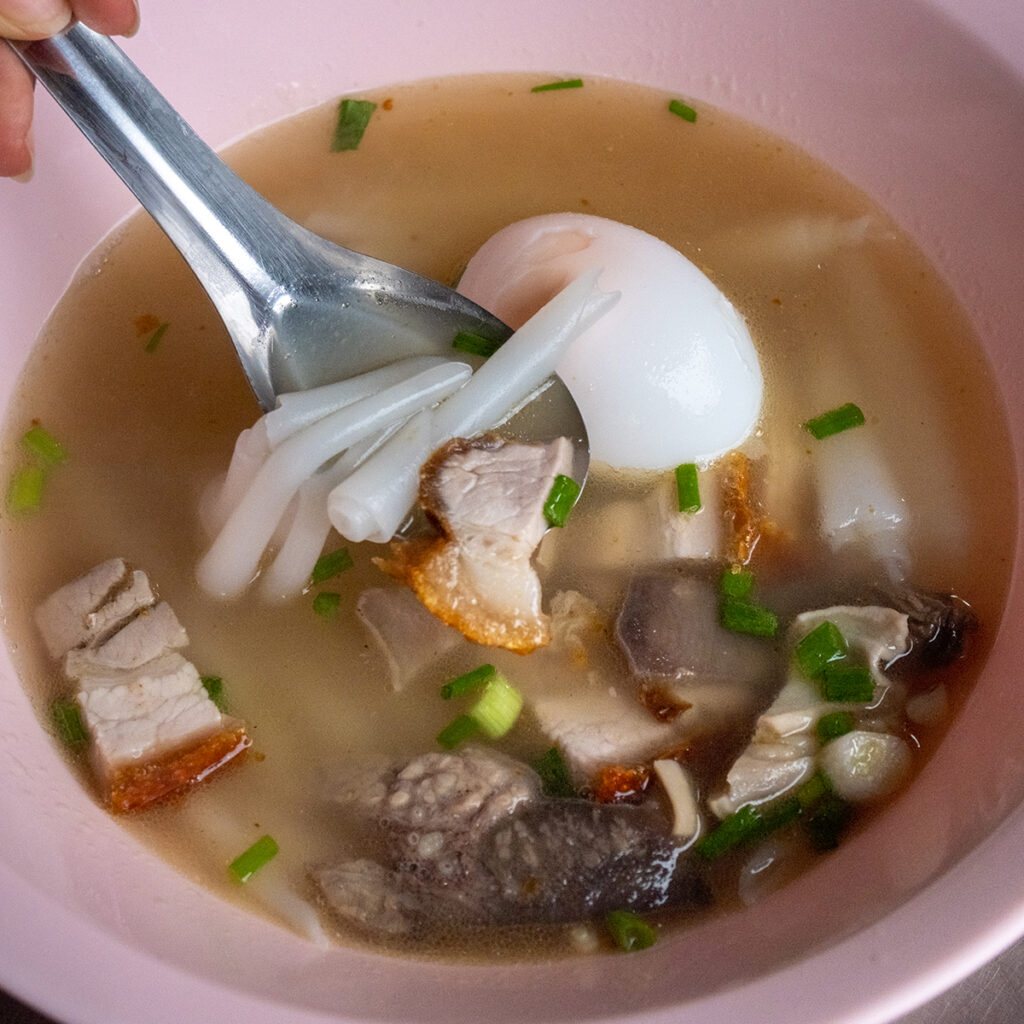
When you sit on a plastic stool in Yaowarat and watch the charcoal flames under a big pot of Kuay Jab—rolled rice noodles in peppery broth—you’re not just having dinner. You’re tasting a story of migration, change, and shared happiness.
So next time you’re in Thailand, skip the green curry for a moment. Instead, look for red lanterns, hanging roasted ducks, and steam rising from a noodle cart. That’s where you’ll find a different kind of magic.
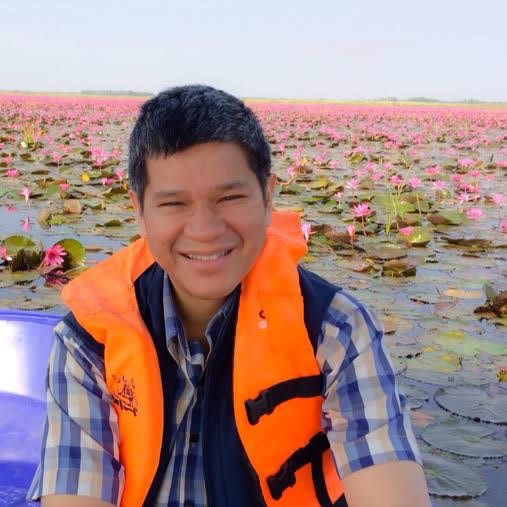
About the Author
“Frequent foodie and occasional craftsman of travel stories, Chattan Kunjara Na Ayudhya (Chat) draws on his nearly 4 decades of promoting Thailand’s tourism industry to highlight everything from world-class attractions to hidden gems. When not writing stuff, he makes it a mission to catch rom-coms and DC superheroes whenever they show up in theaters.”